
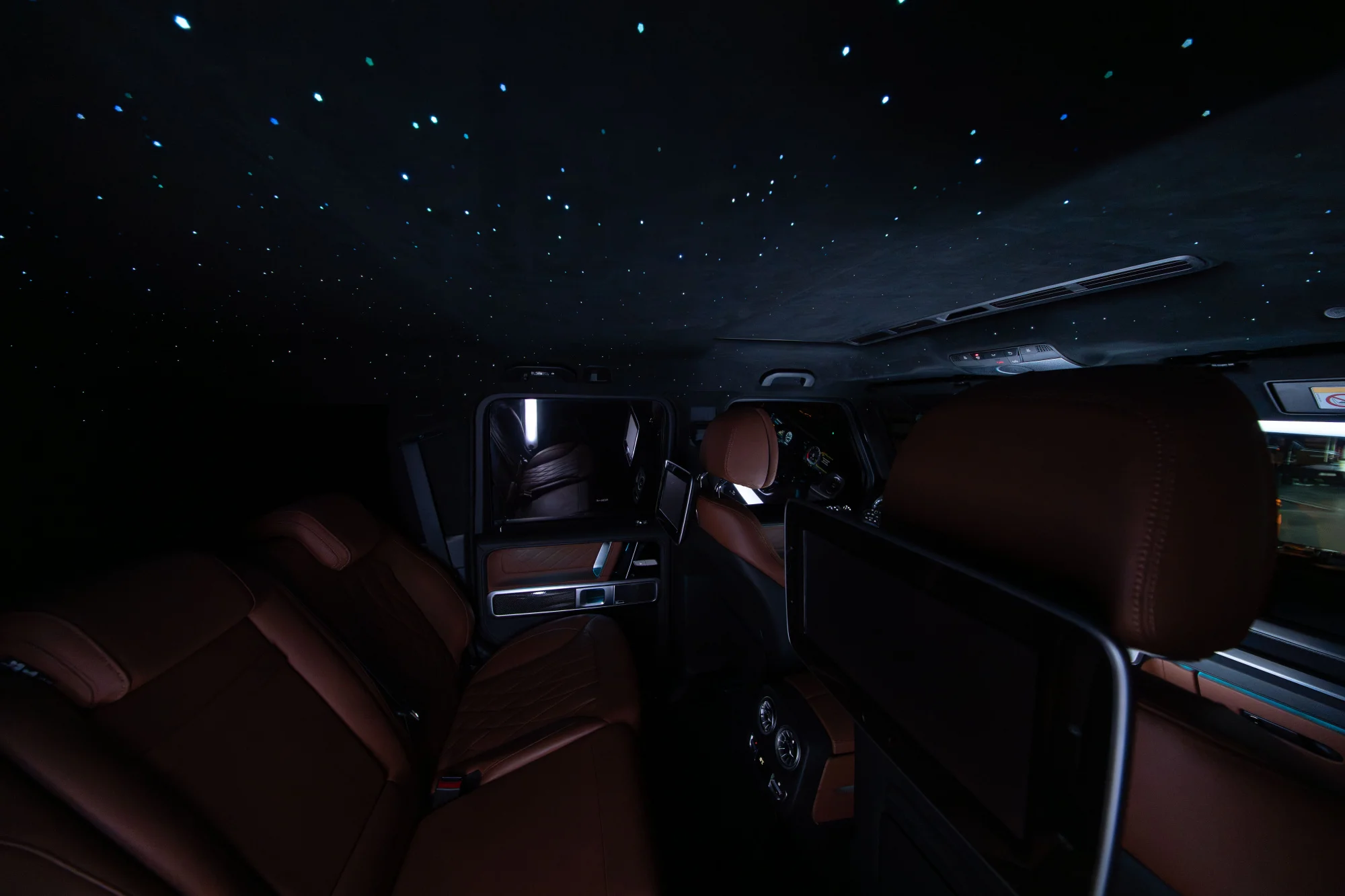
Customising the interior of a premium car involves more than choosing new materials, colours and finishes. Seats, steering wheels, dashboards and door panels may contain airbags, sensors, wiring and other integrated systems, while Dubai’s climate places additional demands on upholstery and decorative materials.
Before approving a project, owners should understand exactly what will be changed, which materials will be used and how the vehicle’s original functions will be preserved.
In this article, the experts at DEIZ GARAGE explain what to consider before ordering interior customisation for a premium car in Dubai, from project scope and material selection to safety systems, workmanship and final inspection.
Pre-order checklist for premium-car interior customization in Dubai
A premium-car owner in Dubai should authorize production only after the scope, materials, design, safety review, warranty terms, and third-party confirmations sit in one document pack. The workshop can confirm its own process and work. It cannot replace the dealer's position on vehicle warranty, the insurer's position on cover, or Dubai RTA's position on approval, inspection, or registration.
Use this checklist before paying the production deposit.
Start with inspection and diagnostics. Then agree a clear scope, estimate, and timeline. Production, installation, and finishing come next. Quality control and a delivery briefing close the project.
The order matters because the intake inspection records the vehicle's starting condition. Final quality control compares the completed cabin with the approved specification. No guesswork at handover.
The final production gate
Do not approve production while a question remains unanswered by the dealer, insurer, or Dubai RTA. This applies when work includes seats, steering-wheel work, dashboard work, ambient lighting, screens, refrigeration equipment, or changes to factory wiring.
A verbal assurance can sound convincing in a showroom. It won't help later if the written order says something else.
Written confirmation is a dated statement that identifies the vehicle, planned work, responsible party, and the point being confirmed.
Define the interior customization scope before requesting a quote
A quote can be compared only when every workshop prices the same interior customization scope. "Full interior" means different things at different businesses. One proposal may cover seat upholstery and door panels. Another may include the dashboard, centre console, headliner, steering wheel, trim, wiring, and final assembly.
Full Interior Reupholstery is a complete interior rebuild covering seats, door panels, steering wheel, headliner, and trim.
Ask the workshop to describe the project by component instead of package name. This improves price accuracy because it separates visible finish work from removal, electrical integration, and safety-system checks.
| Scope group | Examples to specify | What the quotation must state | Extra check |
|---|---|---|---|
| Upholstery | Seats, door panels, armrests, headliner, carpets | Material, colour, stitching, panels included, removal and refitting | Seat functions and airbag areas |
| Trim work | Dashboard, centre console, steering wheel, interior trim | Existing parts retained or replaced, finish, preparation method | Controls, displays, switchgear |
| Cabin equipment | Refrigeration equipment, storage modules, partitions, rear-seat equipment | Mounting location, power source, ventilation, access | Electrical and structural review |
| Electrical options | Ambient lighting, charging points, screens, control modules | Wiring route, switching method, test procedure | Factory wiring and sensors |
| Design work | 3D design, colour study, physical samples | Revisions, approval point, version number | Updated approval after changes |
A useful scope line is not "custom seats." It is "front and rear seat retrim, identified material, specified stitching pattern, retained factory adjustment functions, and documented compatibility review." Specific wording protects both sides.
Published interior retrim pricing should be treated as a vehicle-class ladder, not a flat figure. Ask the workshop to identify the applicable vehicle class and its stated starting price. A custom project also needs a project-specific quotation. The final order must state the exact work included because a starting figure doesn't define the finished project.
What vague scopes hide
The usual problem isn't taste. It's missing boundaries.
If the quotation does not identify each panel, the owner cannot tell whether trim preparation, disassembly, electrical work, or refitting is included. Because of that gap, a lower initial quote may leave out work included in another proposal.
A seat retrim and a cabin-equipment conversion work differently. The first centres on upholstery and fitting. The second can involve electrical supply, mounting, access, and compatibility checks. Calling both an "interior package" is where confusion begins.
How to assess the workshop and its project process
Assess a workshop by its documentation and control process, not by photographs alone. A completed cabin can look persuasive online. It doesn't show how the vehicle was inspected, how parts were protected, who approved design changes, or what happens if the car returns for correction.
DEIZ GARAGE describes itself as a premium automotive workshop in Dubai for owners of luxury, sports, and high-performance vehicles. Its stated process covers diagnostics, planning, manufacturing, installation, finishing, and final quality control. It also states that production capabilities, including custom forged wheels, high-performance downpipes, and carbon-fibre or composite aero and body elements, are handled in-house rather than outsourced.
For an interior project, ask which stated capability applies to your order. Don't assume every listed service belongs in the quotation.
| Assessment point | Ask the workshop for | Why it changes the decision |
|---|---|---|
| Intake inspection | Vehicle-condition record and photographs | It separates pre-existing marks or faults from later issues |
| Scope control | Itemised specification and exclusions | It stops package names replacing actual work |
| Design control | 3D design version and sample approval process | It creates one approved production reference |
| Parts handling | Removal, storage, labelling, and refitting process | It affects traceability of factory components |
| Change control | Written procedure for added work or changed materials | It prevents informal changes becoming disputed charges |
| Quality control | Final inspection and delivery briefing | It links handover to the signed specification |
| Relevant experience | Examples involving similar vehicle systems or interiors | It helps assess relevance, not just visual style |
Ask to see a redacted project specification, not only a gallery. A workshop that can show a process document should be able to explain what will be inspected, approved, and checked at handover.
One small detail matters: agree who can approve changes. If a driver, family office, or manager contacts the workshop, the order should state whether that person can change materials, price, or design. Otherwise, a casual message may be treated as an instruction.
Approve the design before work begins
Approve the 3D design and physical material samples before irreversible work starts. The 3D design should show the planned layout, colour distribution, stitching direction, trim finishes, seating areas, lighting elements, and equipment positions. It is a decision document, not decoration.
A 3D design is a visual production reference that shows the approved appearance and placement of interior elements before installation.
The owner should sign off on:
- seat-panel layout and stitching pattern;
- dashboard, door-panel, and centre-console finishes;
- headliner treatment and trim colour;
- steering-wheel finish and retained controls;
- location and appearance of lighting;
- screens, charging points, refrigeration equipment, or other cabin equipment;
- visible logos, embroidery, piping, veneers, or contrast materials.
Digital colour is not a physical material. A screen can make a surface look cooler, darker, or more reflective than it appears in daylight. The selected physical sample should be labelled, photographed beside the approved design, and added to the project record.
Changes after approval need a new record
Any change to material, colour, stitching, trim component, lighting position, equipment location, or wiring requirement should trigger an updated scope, price, and approval. This isn't paperwork for its own sake. A changed material may alter lead time, fitting method, warranty terms, or the need for another compatibility review.
A good approval record states which version was approved.
Simple. Effective.
Verify materials, samples, and Dubai climate suitability
For interior customization in Dubai, ask the workshop to identify each material by category, intended location, supporting documentation, and care requirements. Heat and strong sunlight can affect colour, coating, adhesive behaviour, surface feel, and long-term appearance. Material choice therefore affects the cabin's look and its maintenance expectations after handover.
Do not accept the phrase "automotive-grade material" unless the workshop can provide certification or supporting documentation for that material. A premium price doesn't prove a material's specification.
| Material category | Where it may be used | What to request | Dubai suitability questions |
|---|---|---|---|
| Natural leather | Seats, door panels, steering wheel, armrests | Origin or product record, finish description, thickness, care guidance | What confirms UV and heat resistance for this finish? |
| Alcantara | Seat inserts, headliner, steering wheel, trim | Product identification, cleaning guidance, colour sample | How will it perform in high heat and regular cabin use? |
| Synthetic upholstery | Seating, door cards, consoles | Product data, thickness, warranty terms | Is UV and heat-resistance documentation available? |
| Decorative trim | Dashboard, console, door trim | Finish sample, fixing method, care guidance | Can heat exposure affect adhesion, colour, or fit? |
| Lighting components | Ambient-lighting elements | Component specification, wiring plan, test process | What operating and installation conditions apply? |
Check the physical sample in shade, direct daylight, interior lighting, and at a normal cabin temperature. A sample that looks good under workshop lights may feel too glossy or too warm in daily use. The interior isn't a jewellery display case. It gets touched.
Request material documentation that identifies:
- material name and supplier or product line;
- intended automotive use, where documentation exists;
- thickness or construction details;
- UV-resistance information;
- heat-resistance information;
- cleaning and care restrictions;
- colour and finish reference;
- material warranty terms;
- exclusions from material warranty.
Material warranty and workmanship warranty are separate. A material supplier may cover a defect in the material itself. The workshop's workmanship warranty addresses fitting, stitching, assembly, and installation. One doesn't automatically cover the other.
Confirm safety-system compatibility in writing
Interior modification can affect safety systems when work involves seats, steering wheels, dashboards, door panels, wiring, controls, or sensors. Obtain written confirmation from the workshop before production begins. It should identify the components reviewed and the limits of that review.
The workshop's written confirmation should address, where relevant:
- airbag locations and airbag-related trim areas;
- seat-mounted systems and seat adjustment functions;
- seat-belt mounting points and related trim;
- occupancy, position, pressure, or other seat-related sensors;
- steering-wheel controls and related systems;
- dashboard components, screens, switchgear, and warning indicators;
- factory wiring, connectors, lighting, and power supply;
- climate controls and infotainment interfaces;
- post-installation testing included in the project.
Why ask before work starts? Because a change in one cabin component can affect another system through its mounting, wiring, sensor position, or access path. A new surface can be harmless. A new installation method may not be.
What the workshop must put in writing
The confirmation should name the vehicle, model year or identifying details supplied by the owner, planned work, systems considered, limitations, and test steps after installation. If the workshop recommends an engineering or technical compatibility review, obtain that review before authorizing production.
A workshop statement records the workshop's position. It is not dealer approval, insurance confirmation, or Dubai RTA confirmation.
Keep those lanes separate.
Check warranty and dealer support before modification
Before modifying a premium car, send the dealer the written scope, design summary, material list, and planned electrical or equipment changes. Ask for a written response on how the work may affect vehicle warranty or dealer support. Do this before parts are removed, not after the handover conversation becomes awkward.
| Question | Workshop response | Dealer response |
|---|---|---|
| What does the workshop cover? | Materials, installation work, exclusions, remedy process | Not applicable unless dealer performs or supports the work |
| Can work affect vehicle warranty? | Workshop can describe its own work and process | Dealer should state its position on manufacturer or dealer coverage |
| Are factory systems being changed? | Workshop identifies planned work and compatibility review | Dealer confirms its position on related support or warranty |
| What records should be retained? | Order, design approval, material record, handover papers | Written dealer consent or written response |
The distinction matters. Workshop warranty covers the workshop's agreed work. Vehicle-manufacturer warranty concerns the vehicle and its original systems. They are different promises.
Request written dealer consent when planned work may involve factory seats, airbags, steering-wheel functions, dashboard systems, electrical connections, control modules, or other original components. Even if the dealer says formal consent isn't required, retain that written response with the project file.
A common belief is that careful workmanship settles the warranty question. It doesn't. Careful workmanship addresses installation quality. Dealer support depends on the dealer's stated position for the planned modification.
Check Dubai RTA, registration, and insurance implications
For interior customization in Dubai, ask Dubai RTA whether the planned modification requires approval, technical inspection, or a registration-record update. Do not infer the answer from workshop experience or another owner's project. Dubai RTA is the confirming party for its own requirements.
Describe the planned work in specific terms. Include changes to seating, steering-wheel components, cabin equipment, electrical systems, lighting, screens, or structural mounting.
| Party | Question to ask before work | Record to retain |
|---|---|---|
| Dubai RTA | Does this planned interior modification require approval before work? | Written confirmation or stated process reference |
| Dubai RTA | Is technical inspection required after completion? | Inspection instruction or result, if applicable |
| Dubai RTA | Does the change affect vehicle registration records? | Registration-update instruction, if applicable |
| Insurer | Must the modification be disclosed before work begins? | Written insurer response |
| Insurer | Can the change affect cover, declared value, exclusions, or premium? | Updated policy terms or written statement |
| Workshop | What final records will be supplied? | Invoice, specification, warranty, handover checklist |
Registration and insurance are separate questions. Dubai RTA considers approval, inspection, and registration matters. The insurer considers the policy and cover. One response doesn't replace the other.
Information to send to the insurer
Send the insurer the vehicle identification details, written scope, approved design summary, electrical or equipment changes, expected completion date, and the workshop's final invoice when available. Ask if the insurer needs photographs, valuation information, or an updated declaration after completion.
Insurance outcomes depend on the insurer's written position. Keep it with the policy documents, not only in a chat thread.
Agree workmanship and material warranty terms
The written order should separate material warranty from workmanship warranty, state exclusions, and explain how a defect will be reported and corrected. A phrase such as "warranty included" is too vague to guide a repair request later.
The specific project order must identify the applicable material and workmanship coverage. It should also name the exclusions, the reporting route, and the repair or replacement procedure. Do not treat warranty language used for unrelated services as proof of cover for interior customization.
| Warranty item | What the order should state |
|---|---|
| Materials | Material covered, duration, supplier conditions, care requirements, exclusions |
| Workmanship | Installation, stitching, fitting, assembly, duration, exclusions |
| Electrical work | Components covered, testing performed, limits of coverage |
| Remedy | Repair, replacement, reinstallation, assessment process |
| Claims process | Contact method, evidence required, response procedure |
| Handover papers | Final invoice, approved specification, material record, warranty statement, care guidance |
Ask what happens if an approved material sample differs from the installed finish. Ask how a defect is assessed. Ask if the vehicle must return to the same workshop for inspection.
Ordinary questions. They save time later.
FAQ for luxury and supercar interior customization in Dubai
Do luxury-car owners need different checks?
The core checks are the same: defined scope, approved samples, written safety confirmation, dealer response, Dubai RTA check where relevant, insurance confirmation, and warranty terms. Luxury-car owners may need more detail where rear-seat equipment, complex trim, or added cabin electronics are planned.
Do supercar owners need extra compatibility checks?
Usually, the need depends on planned work, not the badge. Supercar owners should obtain written workshop confirmation for seats, airbags, steering-wheel controls, sensors, wiring, and factory interfaces when those areas are affected.
Which approvals should be obtained before work starts?
Obtain the signed workshop scope, 3D design approval, physical material approval, workshop safety confirmation, dealer response where relevant, insurer response, and Dubai RTA confirmation where the planned modification requires it.
Does a workshop's statement replace dealer, insurer, or Dubai RTA confirmation?
No. A workshop confirms its own work and process. The dealer, insurer, and Dubai RTA each confirm matters within their own authority.
What should be retained after final handover?
Keep the final specification, approved design, labelled material record, invoice, warranty statement, care guidance, workshop safety confirmation, dealer correspondence, insurer correspondence, and any Dubai RTA or inspection documents.
Are Detailing and Wrapping & PPF part of this decision?
No. They are separate service categories and do not determine the checks required for interior customization.
